

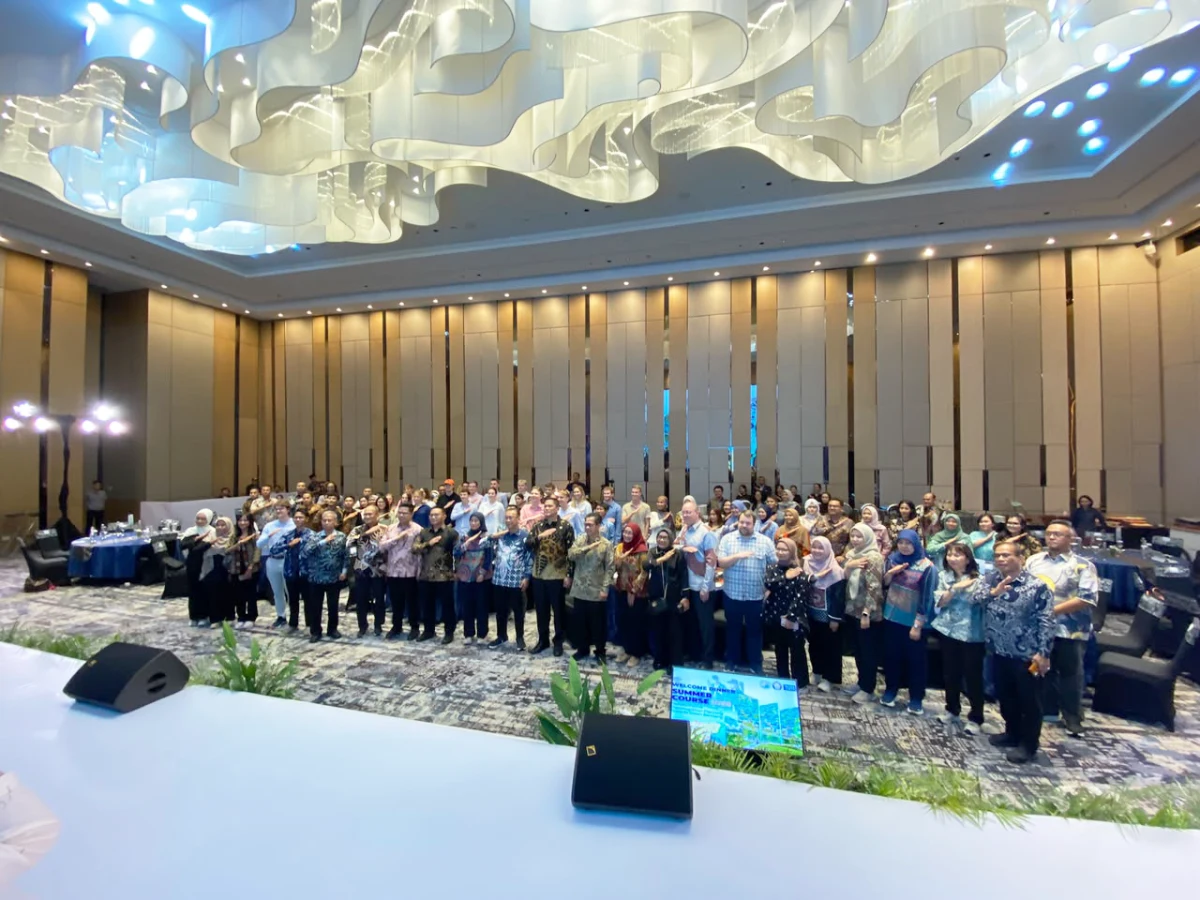
UNDIP, Batam (Oct. 3) — Universitas Diponegoro (UNDIP), the Technical University of Munich (TUM), and the Ministry of Transmigration held a welcome dinner for the 2026 Summer Course titled “Transformative Transmigration Planning Towards Green Barelang” in Batam on Thursday (Oct. 1). The event is part of a collaborative program series promoting the development of transmigration areas that are sustainable, resilient, and oriented toward green growth principles.
The welcome dinner was attended by representatives of BP Batam, the Batam Police Chief, and the Patriot Expedition Team from the University of Indonesia (UI), IPB University, Bandung Institute of Technology (ITB), and Sepuluh Nopember Institute of Technology (ITS). The gathering served as a forum to welcome participants while strengthening communication and collaboration among the government, universities, and stakeholders.
Key Highlights and Strategic Developments

The program began with dance performances, followed by welcoming remarks from representatives of BP Batam, Universitas Diponegoro, the Technical University of Munich, and the Ministry of Transmigration. Alexander Zulkarnain attended on behalf of BP Batam to deliver the welcoming address.
From UNDIP, remarks were delivered by Prof. Dr. Achmad Zulfa Juniarto, Vice Chair of the Institute for Research and Community Service (LPPM) at UNDIP. Meanwhile, Prof. Walter Timo de Vries represented the Technical University of Munich (TUM), and Acting Director General of Economic Development and Community Empowerment for Transmigration Harlina Sulistyorini represented the Ministry of Transmigration.
Sustainable Impacts and Global Collaboration
The 2026 Summer Course is designed to bring together academic perspectives and field practices in formulating ideas to transform transmigration areas into sustainable settlement environments. According to the program agenda, participants will explore various aspects, including economic development and productive land utilization, land and landscape management, environmental and ecological conservation, as well as social development and community empowerment.
Through an experiential learning approach involving discussions, field visits, and community interaction, the program is expected to broaden knowledge exchange and generate planning ideas capable of balancing economic development, ecosystem protection, climate resilience, social equity, and the provision of sustainable infrastructure.
The collaboration among UNDIP, TUM, and the Ministry of Transmigration through the 2026 Summer Course represents an effort to strengthen networks in education, research, and community service, while promoting the development of the Barelang area oriented toward sustainable development principles. (Public Communication / UNDIP)