

UNDIP, Senggi, Keerom Regency (Oct. 2) – The Universitas Diponegoro Patriot Expedition Team (TEP UNDIP) Team 15 has designed and implemented an integrated agriculture and livestock cluster in Woslay Village, Senggi District, Keerom Regency, Papua. The collaborative program between UNDIP and the Ministry of Transmigration is aimed at optimizing local potential, increasing livestock productivity, and creating a self-reliant and sustainable regional production system.
In its implementation, Team 15 focuses on designing the integrated agriculture and livestock cluster, synergizing with Team 3 which focuses on developing the institutional capacity of livestock groups. This collaboration ensures that the development of production infrastructure proceeds in line with community capacity building.
The cluster adopts a circular economy approach that connects the cattle farming and agriculture sectors. Livestock waste is processed into compost and organic fertilizer to enrich agricultural land, while crop yields and forage grasses are reused as animal feed. The system is expected to improve the efficiency of local resource utilization while reducing dependence on external supplies.
Key Highlights and Strategic Developments
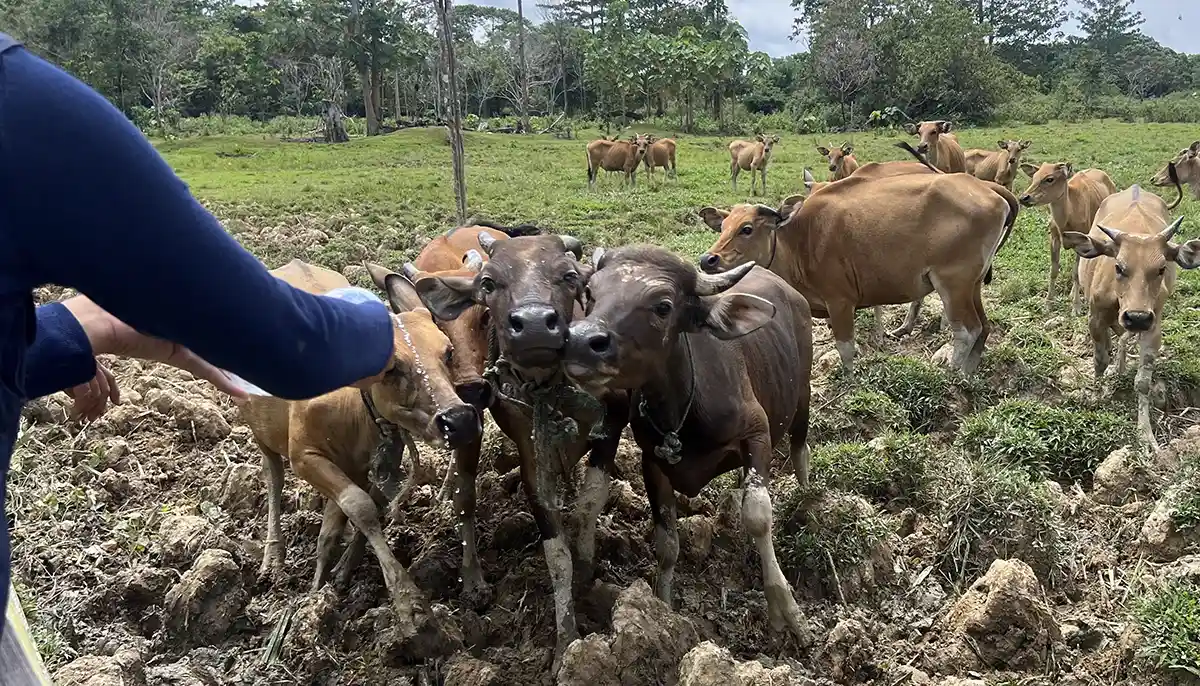
The cluster area designed by Team 15 includes cut-and-carry grass fields, grazing pastures, waste processing facilities, feed warehouses, and specialized pens for sick cattle and pregnant cows.
Beyond production aspects, Team 15 also focuses on improving genetic quality and livestock reproduction management. This measure is taken to mitigate the risk of inbreeding which has diminished the quality of the community’s cattle population. Through institutional strengthening and more targeted reproduction management, the community is expected to be able to reduce inbreeding practices, maintain genetic diversity, and improve the quality of the cattle population.
A participatory approach was applied from the early planning stage through joint mapping with residents, leading to the formation of a six-member pioneer group as the initial driver of activities. The approach integrates academic knowledge with the community’s experience in farming and livestock rearing. Head of the Pioneer Group, Hari, emphasized that the community-established group was born from a shared commitment to building local self-reliance. “This pioneer group embodies the determination of the transmigrant community to develop the livestock sub-sector to be self-reliant and innovative without relying on aid,” he said.
Sustainable Impacts and Global Collaboration
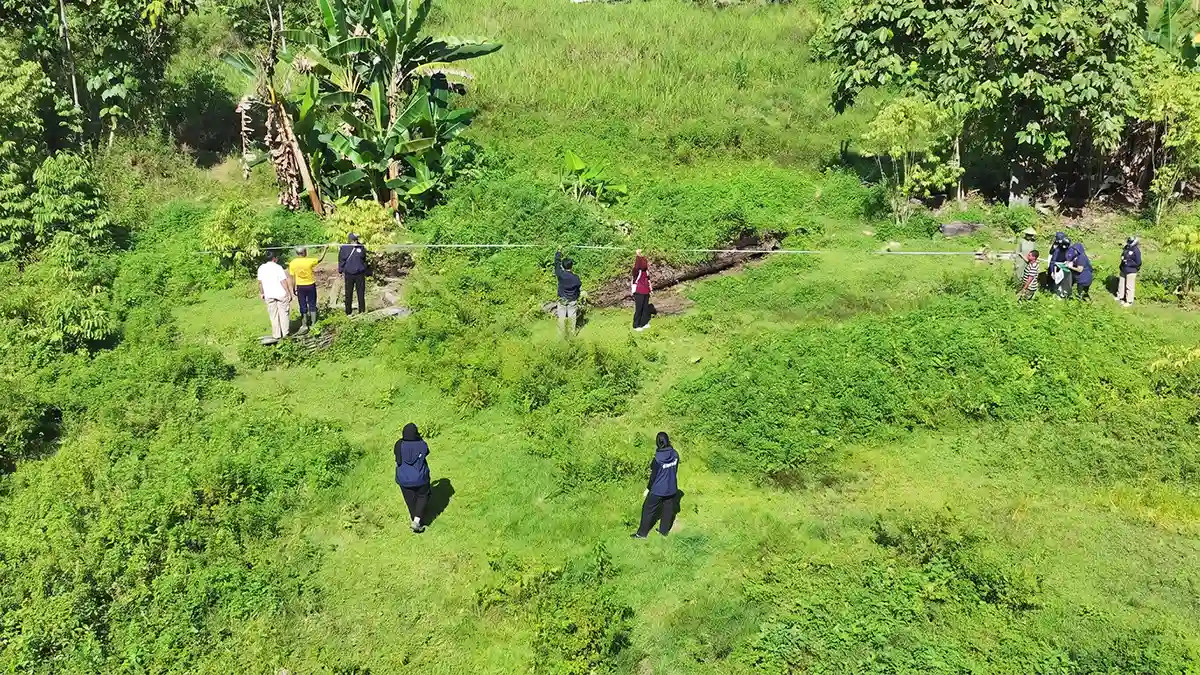
As the basis for regional planning, TEP UNDIP conducted mapping and measurement of demonstration plot land using drone mapping to comprehensively measure contours and area coverage. The initial stage of cluster development began on Wednesday (Sept. 2) through mutual cooperation to clear land and create planting beds in preparation for planting superior forage grass.
Through the synergy of TEP UNDIP Team 15 and Team 3, the development of this cluster is expected to serve as a strong foundation for the establishment of farmer institutions, improvement of livestock quality, and realization of an integrated, efficient, and sustainable agriculture-livestock system in the Senggi transmigration area.
The program also supports the achievement of the Sustainable Development Goals (SDGs), particularly SDG 1 (No Poverty), SDG 2 (Zero Hunger), SDG 8 (Decent Work and Economic Growth), SDG 12 (Responsible Consumption and Production) through the implementation of the circular economy, and SDG 17 (Partnerships for the Goals) through strategic collaboration among universities, government, and local communities. (UNDIP Public Communication)