
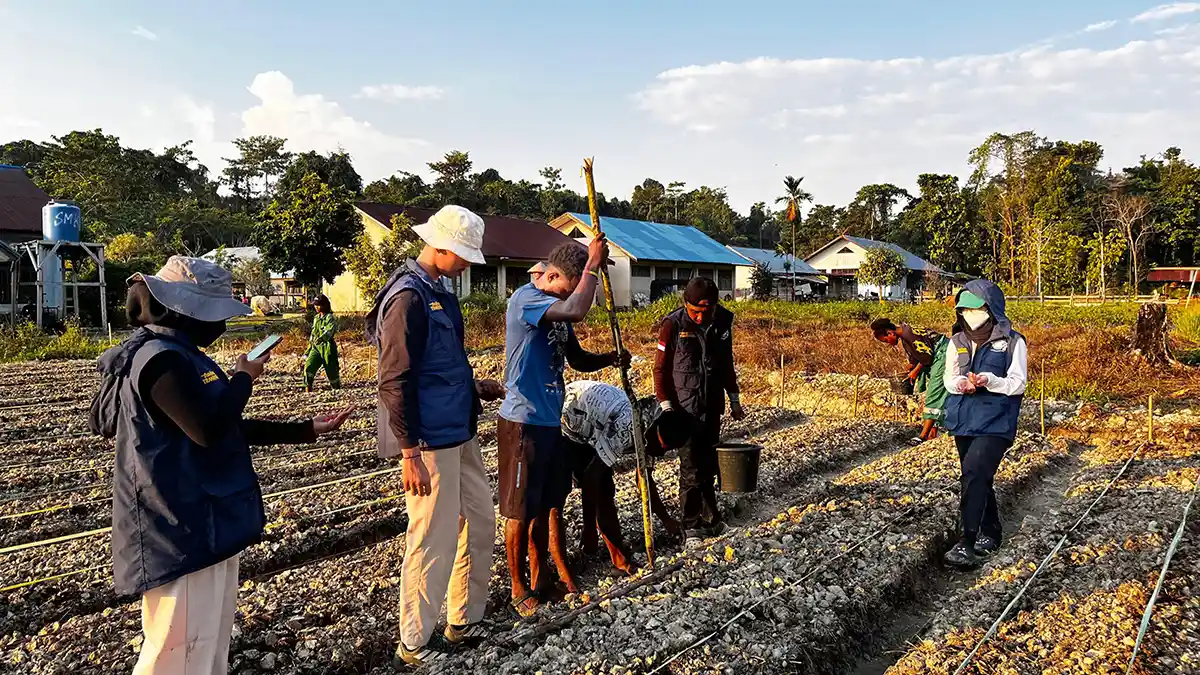
UNDIP, Senggi, Keerom Regency (Sept. 30) – Strengthening the agricultural sector in transmigration areas requires the readiness of independent and sustainable human resources, in addition to infrastructure development. In response to this need, Team 7 of the Universitas Diponegoro Patriot Expedition (TEP UNDIP) provided learning assistance at SMKN 2 Keerom, particularly for the Agribusiness and Agrotechnology majors.
This initiative represents TEP UNDIP’s contribution to supporting agricultural education while fostering interest and awareness among the younger generation regarding agricultural potential in Keerom. Learning materials were tailored to real field conditions, covering cultivation, application of agricultural technology, farm business management, post-harvest processing, and business opportunity mapping. Through this approach, students are guided to view agriculture as a strategic sector based on innovation, technology, entrepreneurship, and sustainable governance, rather than merely a traditional occupation.
This mentoring initiative comes amid limited teaching staff at the school. Ike, an agriculture teacher at SMKN 2 Keerom, revealed that she alone handles all agricultural learning materials, both theory and practice. “I am the only teacher who teaches agriculture, both theory and practice. Therefore, there are certainly limitations in the implementation of learning. However, we continue to strive to ensure that the children receive the knowledge and experience they need to understand agriculture,” said Ike.
Key Highlights and Strategic Developments
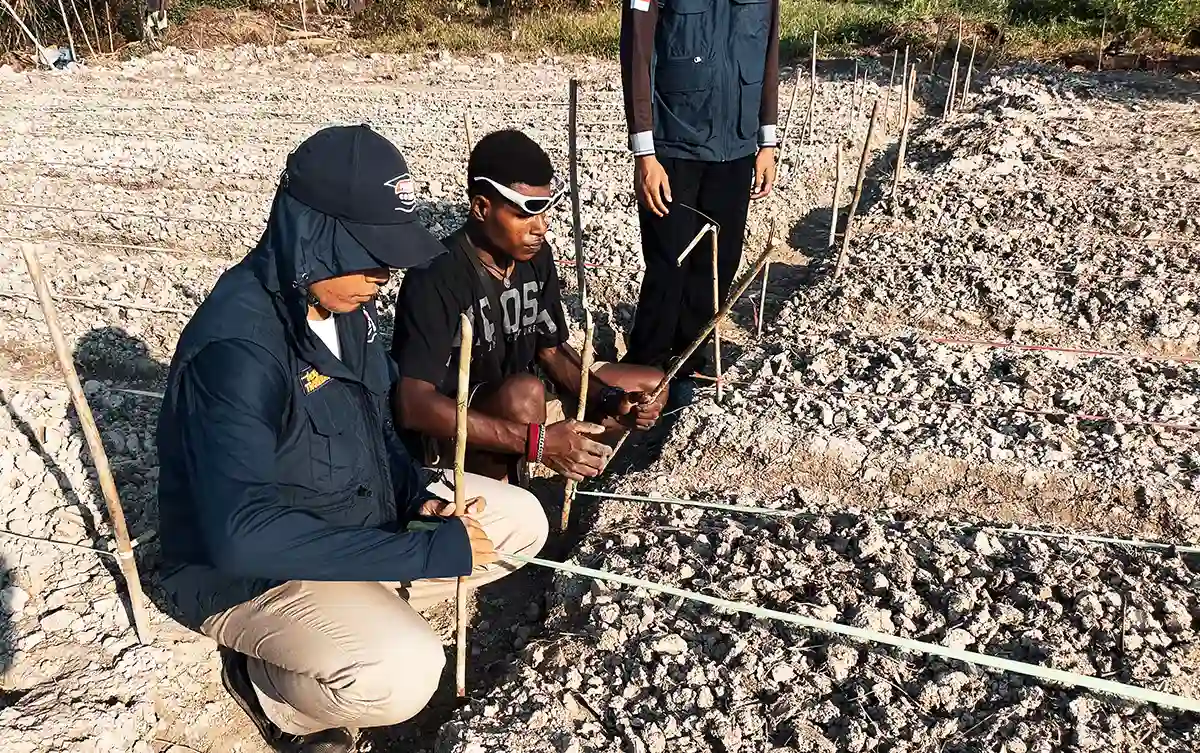
The presence of TEP UNDIP opens space for collaboration to broaden students’ insights and practical experience. Learning is directly connected to strategic issues in the Senggi transmigration area, such as climate change adaptation, limited production facilities, increasing land productivity, and strengthening food security. Through this method, students are trained to analyze sectoral challenges while formulating solutions based on local potential.
Head of Team 7, Fajrin Pramana Putra, S.P., M.Sc., emphasized the importance of aligning physical agricultural development with human resource capacity building. “We see that strengthening agriculture is not enough by merely building facilities and infrastructure. We must also prepare a young generation equipped with the knowledge and skills to manage the agricultural sector in the future,” said Fajrin.
He added that Keerom youth play a crucial role in maintaining the sustainability of agribusiness and regional food security. Therefore, students are expected not only to absorb theory but also to grow into innovative agricultural entrepreneurs, practitioners, and professionals.
Sustainable Impacts and Global Collaboration
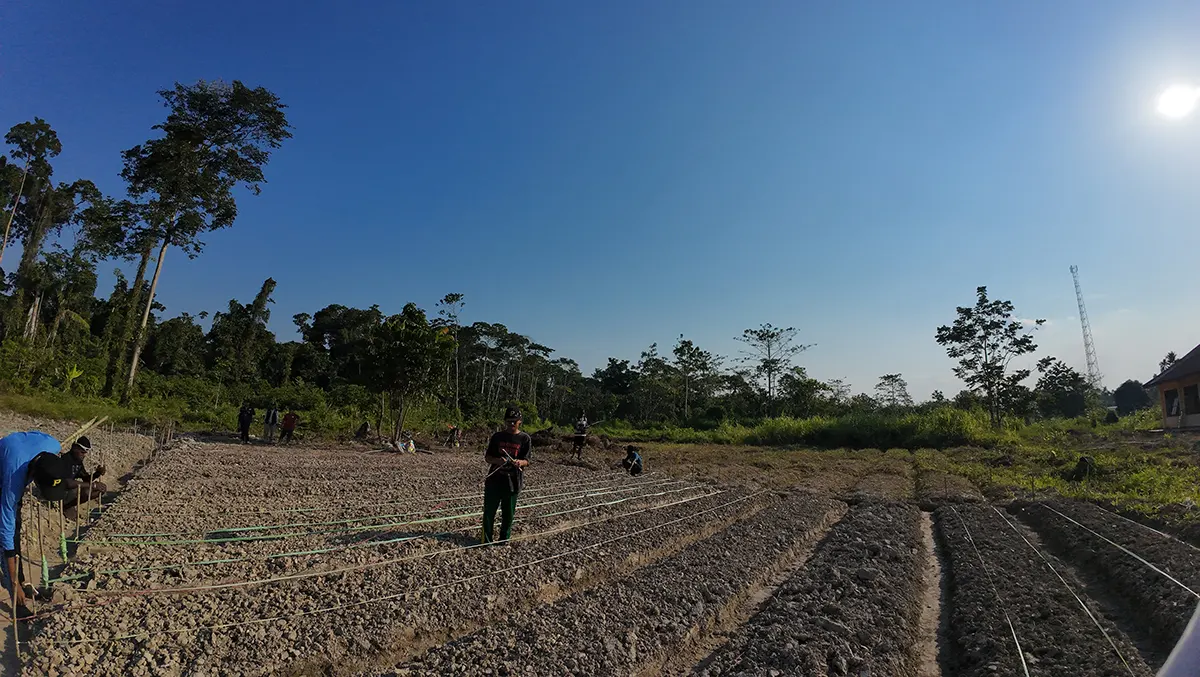
This mentoring program is driven by TEP UNDIP Team 7, led by Fajrin Pramana Putra, S.P., M.Sc., along with team members: Adelia Regita Andini, S.P.W.K.; Siti Nuriyana, S.Si.; Samuel Hasudungan Hutagalung, S.P.W.K.; Punggah Assa’bana, S.P.; and Rizal Fahmi Imanullah, S.P., as a tangible form of community service in the transmigration area.
The teaching initiative at SMKN 2 Keerom is not merely a routine academic activity, but a strategic step to promote farmer regeneration and regional self-reliance. Education serves as the main foundation for nurturing a generation adept at optimizing Papua’s natural potential through scientific approaches and practical skills. This activity affirms that the future of agriculture in Keerom depends heavily on a knowledgeable younger generation that dares to innovate and is committed to developing its own region.
This mentoring activity by TEP UNDIP also supports the achievement of the Sustainable Development Goals (SDGs), particularly SDG 2 (Zero Hunger) through strengthening food security, SDG 4 (Quality Education) by improving access to learning in transmigration areas, SDG 8 (Decent Work and Economic Growth) by nurturing young agricultural entrepreneurs, and SDG 17 (Partnerships for the Goals) through strategic collaboration between academics and schools. (Public Communication/UNDIP)